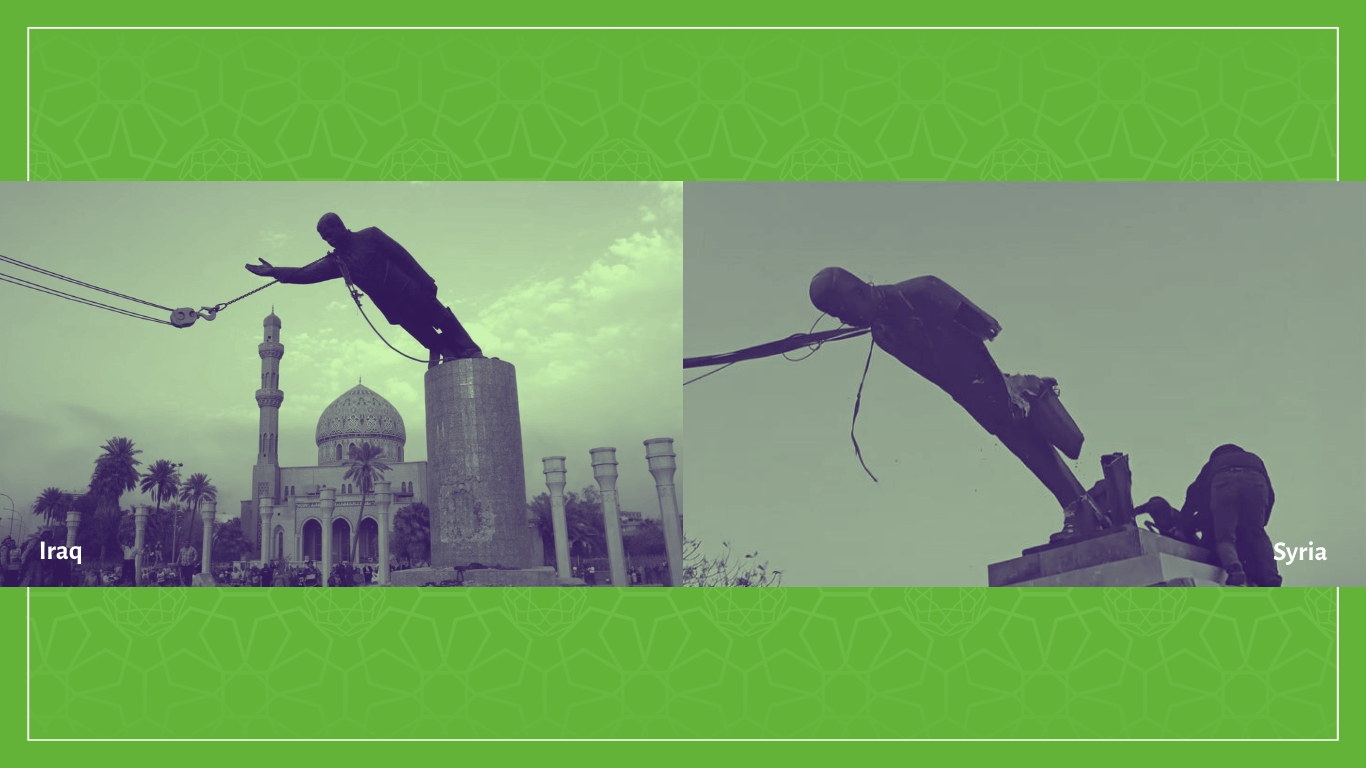
Learning from Iraq: Ten Transitional Justice Lessons for Syria
Lessons from Iraq show that justice and peace must go hand in hand. All survivors should be able to see their tormenters called to account before a court of law and realize their right to reparations without being excluded or stigmatized. Political power-sharing and inclusive solutions for land, property, and minority rights are essential. Effective accountability mechanism and civilian oversight of the security sector are required to prevent renewed violence and ensure stability.
All those working on transitional justice (TJ) are looking hopefully towards Syria. The unique window of opportunity to engage and shape the reality for hundreds of thousands if not millions of survivors, families of victims and many others affected by the devastating nearly 15-year conflict is still open.
This paper shares Jiyan Foundation’s lessons from its two decades long work in neighboring Iraq on providing rehabilitation services for torture survivors, supporting marginalized communities and advancing TJ processes. It is written for international and national actors shaping TJ processes in Syria, in particular policymakers, civil society partners and donors.
We recognize the strong parallels between Iraq and Syria which lend credence to recommendations presented below. Namely, both were under Ottoman rule and subsequently shaped by the British and French mandates established under the Sykes–Picot Agreement. There are similarities in the ethnic, religious, linguistic and geographical landscapes1. Both countries have suffered decades long Baathist dictatorships, protracted conflicts, civil wars, and foreign interventions.
While acknowledging that each context is unique and that copy-paste formulas should be avoided, we favor a “lessons learned” approach to advancing progress in post-dictatorship contexts. The goal was to develop practice-based recommendations on what to consider or avoid in order to establish an inclusive, meaningful and realistic TJ model for Syria.
1. Avoid general and sweeping lustration or vetting programs that could alienate significant parts of the population
The Ba’ath Party had an almost complete hold on political representation of Sunni Arabs in Iraq; a meaningful Sunni Arab opposition did not exist. Post-war De-Ba’athification in Iraq excluded members of the Ba’ath Party from holding political office or positions in the military, at a time when a sizable part of the Sunni population was involved with the party, though many joined because it was mandatory for their chosen profession. De-Ba’athification was therefore experienced as exclusion from political participation and collective punishment among Sunni Arabs2. The political vacuum and vulnerability in the Sunni community paved the way for Islamist groups, insurgency and violent internal conflict. The Iraqi example offers a warning against general exclusion of large swaths of the population from the institutions of a renewed Syria.
While at the outset many Iraqis thought of De-Baathification as a policy that should prosecute perpetrators, secure reparations, return stolen property, create memorials, revise educational curricula and prevent the Baath Party’s return to power3, these objectives were never achieved due to fundamental flaws. Any vetting process in Syria should therefore be individualized, transparent, and based on proven conduct, not rank or affiliation4.
2. Prioritize sustainable and coordinated provision of rehabilitation services including but not limited to psychosocial and medical support, for survivors of torture and other grave human rights violations
Rehabilitation services are often mistakenly understood to equate only to psychosocial and medical services. Jiyan Foundation´s understanding of rehabilitation is informed and guided by the International Rehabilitation Council for Torture Victims (IRCT) Global Standards on Rehabilitation of Torture Victims to ensure holistic, high-quality, survivor-centered care addressing physical, mental, legal, and social needs of survivors5.
In Iraq the infrastructure for rehabilitation was set up in a fractured and localized manner, and remains dependent on uncertain, short-term grants by a wide array of foreign donors. We believe it is preferable to set up a blueprint for a unified system for the entire country, possibly through a national rehabilitation fund, mapping where such centers already exist and building up referral systems to avoid overlapping, and allow for a better integration into national and permanent structures. Moreover, such a model should encompass a central hub serving as the primary coordination and capacity-building center, complemented by satellite centers located near survivor communities. The hub, led by leading experts, would provide training for emerging professionals (e.g., junior doctors, psychologists, social workers, and educational specialists), supervise therapists, develop ethical codes of conduct, and engage survivors in consultation. It would integrate three key components: training (to develop a national workforce), capacity-building (to strengthen external expertise), and service delivery (to provide specialized, holistic rehabilitation).
Services should encompass psychological care, medical assistance, legal aid, vocational training, family interventions, and social support. Donors should support a gradual transfer of services into the state system, with a clear roadmap towards integration and sustainability6.
3. Avoid peace and justice trade off by creating strong institutions with a mandate to hold accountable all parties to the conflict
Following the toppling of the Baath regime, Iraqi High Tribunal was established to try Saddam Hussein and members of the Ba’ath party accused of genocide, crimes against humanity and war crimes. However, Saddam Hussein himself was never held accountable for his crimes against the Iraqi Kurds as he was, following a final guilty verdict in the Al-Dujail case and his subsequent execution in December 2006, withdrawn as a defendant in an Al-Anfal case7. For his victims this precluded the satisfaction and official recognition of what they had suffered.
In 2017, responding to calls for justice for victims of the self-declared Islamic State of Iraq and the Levant (ISIL), the UN Security Council established the UN Investigative Team to Promote Accountability for Crimes Committed by Da’esh/ISIL (UNITAD)8. This UN body was mandated to collect, preserve, and store evidence of ISIL-perpetrated acts amounting to core international crimes for use in Iraqi or third-country courts9. However, UNITAD’s mandate was limited to ISIL crimes and excluded atrocities committed by other parties. Crucially, its evidence has not served its intended purpose, as Iraq failed to incorporate international crimes into domestic law. Instead, thousands of alleged ISIL members were prosecuted under counter-terrorism laws through opaque proceedings lacking fair trial guarantees10. The Iraqi experience highlights a critical lesson: accountability mechanisms must not target only one party, regardless of duration and magnitude of the crimes committed. Effective transitional justice requires a comprehensive mandate to investigate and prosecute all perpetrators, including those currently in power. No actor should be beyond the reach of justice.
4. Condition any substantive support for any transitional justice processes including criminal justice with clear and measurable commitment on the part of the receiving authorities to deliver
Though UNITAD was established to collect and preserve evidence on international crimes committed by ISIL only, Iraqi civil society supported its work irrespective of this, as it reasoned that a measure of justice is better than no justice at all11. However, UNITAD´s mandate was terminated prematurely, again upon request of Iraq. The main problem was sharing of evidence as Iraq did not meet its commitment to codify international crimes and create a criminal accountability mechanism capable of putting the evidence collected to their intended use12. So, integral evidence was archived at the UN Headquarters without a possibility of being used for accountability purposes, neither in Iraq, nor elsewhere.
Lesson for Syria is that before such a mission is deployed, explicit commitment must be secured to ensure that evidence collected will be put to its intended use in the receiving country and that it will remain available for accountability purposes elsewhere. Moreover, international support should be conditioned by reaching tangible previously defined milestones or benchmarks13.
5. Pursue multi track approach towards realizing distinct, Comprehensive, and Inclusive TJ measures
What concerns reparations one should consider Iraq´s effort to directly address conflict-related sexual violence (CRSV) ISIL deliberately inflicted upon Iraqi ethno-religious minorities, particularly the Yazidis. The passing of the Yazidi Survivors Law (YSL) on March 1, 2021, marked an important milestone in Iraq’s post-conflict recovery period, as it promised to deliver long-awaited relief not only to Yazidi, Shabak, Turkmen and Christian women and girls that ISIL subjected to CRSV, but also to men who survived mass killings as well as captured Yazidi children. The YSL mandates several critical state-sponsored reparative measures including financial support, medical and psychological care, provision of land, housing, education, and a quota in public sector employment.
Moreover, it officially recognizes that ISIL committed genocide and crimes against humanity against Yazidi, Christian, Turkmen, and Shabak minority groups and mandates memorialization, search for missing persons, the opening of mass graves, identification of remains and their return to their families, and calls for Iraqi institutions to ensure that perpetrators of genocide and crimes against humanity are held accountable. In addition, the associated bylaws expanded these obligations even further, including an obligation for government agencies to develop specialized curricula on the ISIL conflict designed to promote peaceful coexistence and the renunciation of violence. Finally, the YSL explicitly stipulates an objective to prevent the recurrence of the violations that occurred against the indicated minorities. Jiyan Foundation spearheaded an alliance of Iraqi NGOs (Coalition for Just Reparations-C4JR) who contributed to enactment of the YSL. It created a Draft law on Reparations for Survivors of Conflict Related Sexual Violence Committed During the ISIS Conflict in Iraq14 and conducted advocacy towards improving the initial YSL draft. It also provided recommendations for the YSL implementing regulations15 and regularly reported on YSL implementation efforts16. The broad outlook of the YSL was very much welcomed by the Iraqi civil society and praised internationally. Moreover, it was seen as a milestone in Iraq and the region.
However, looking back, more than 4 years after the YSL enactment, it turns out that mandating criminal accountability in the YSL—a law whose primary objective is to establish an administrative reparation program— was not the most appropriate approach. Moreover, such an approach seems to have produced a counter effect, in that it decreased rather than expanded the rights of survivors. Namely, it did not lead to delivering criminal convictions for international crimes, but it introduced high (judicial) standard of proof thus closing off pathways to reparations for many survivors. This would then make a good case for prioritizing a two-track approach—separating reparations from criminal accountability entirely— in other post conflict settings, including Syria.
6. Prioritize reparations for all victims of grave human rights violations in Syria committed by all parties to the conflict
7. Consider including certain power sharing arrangement between different ethnic and religious groups in forms of federalism or autonomy
8. Avoid repeated, and overlapping documentation of human rights violations, ensure survivor’ participation through ethical engagement, create safe spaces and procedures
In response to the wartime crimes perpetrated by ISIL, comprehensive documentation efforts were undertaken in Iraq. Such efforts, initially conducted by Iraqi NGOs, and later by state institutions, and international organizations such as UNITAD, led to repetition and burdened the survivors and their communities. This led not only to putting survivors and their families over and again in stressful and potentially re-traumatizing situations, but also to creating unrealistic expectations that justice will be served and reparations provided in a survivor-centered and timely manner. Documentation can serve as a powerful tool for justice, shaping opportunities—or imposing limitations—on the pursuit of various justice processes17. Over-documentation, however, presents a significant challenge. Repeatedly requiring survivors to recount their testimonies at different stages of the TJ processes risks re-traumatization, potentially delays access to justice and reparations. Addressing these issues demands a more coordinated, trauma-informed approach to documentation—one that minimizes harm and respects the complexity of survivors’ experiences.
Moreover, survivors’ participation across all pillars and stages of the TJ processes18 should be ensured through ethical engagement including regular consultations, co-creation initiatives and support for their self-organization. Engagement should be diversified to reflect victimhoods and distinct experiences of different victim and survivor groups (women, ethnoreligious minorities, regime opponents etc.).
9. Prioritize guarantees of non-repetition through creating realistic and lasting reforms in an inclusive consultative process
The 2005 Constitution of Iraq, enacted after comprehensive deliberation among Iraqi power blocks, Shia Arab, Sunni Arab and Sunni Kurds, formulated a pathway to righting wrongs stemming from Saddam Hussein’s rule, most notably demographic engineering pursued through Arabization politics. The agreement was that the status of contested areas such as Kirkuk was to be resolved through a process stipulated in the constitution itself. Regrettably, 20 years later, constitutional provisions remain unimplemented, which led to growing rift between communities in the country and general disillusionment with the purpose and role of the constitution itself. Prolonged conflict between the central government and the KRG culminating in the 2017 independence referendum plays out first and foremost to the detriment of the citizens, especially those in the Kurdistan region of Iraq, who do not receive their salaries as Baghdad uses transfer of funds for salaries as leverage against the KRG. All of this contributes to the erosion of trust in state and general apathy.
Moreover, despite Iraq’s parliament passing the land restitution act in 2025 with a view to return land confiscated by Baath regime to original owners, Kurdish and Turkmen farmers still cannot regain factual control over their land seized over half a century ago. Namely, as the said legislation does not contain specific implementation mechanisms it can, thus, be simply ignored by competent authorities. It is important for Syria to address housing, land and property (HLP) issues within the period of transformation. Instead of searching for grand solutions for structural, decades old HLP problems and setting strict time limits, it may be more promising to prioritize inclusive consultation processes aimed at finding and quickly implementing solutions for specific problems. Such “lesser” successes would increase trust among the parties involved and lead to further positive developments.
10. Create unified armed and police forces inclusive of all relevant components of society, exercising their authority with accountability and under civil oversight
The militarization of public space in Iraq has deeply eroded state authority and weakened prospects for stability19. One of the most critical lessons from the Iraqi experience is the failure to unify armed forces under a single national command. More than two decades after 2003, Iraq remains fragmented by the presence of over 70 armed groups, many of which operate autonomously and, in some cases, under the direct influence of foreign states20. This proliferation of militias has resulted in competing power centers, undermining governance, fostering lawlessness, and entrenching external interference in domestic affairs.
For Syria, avoiding a similar trajectory is imperative. Any post-conflict security architecture must prioritize unified command structure of armed forces at federal and/or regional level. At the very least, effective mechanisms for coordination, transparency, and accountability of all groups authorized to bear arms must be established. This is essential to restore the state’s monopoly on the legitimate use of force, prevent factionalism, and guarantee civilian control over security institutions. Failure to do so risks perpetuating cycles of violence, empowering warlords, and creating fertile ground for renewed conflict and external manipulation. A coherent, accountable security sector is indispensable for sustainable peace and the rule of law.
Dr. Bojan Gavrilovic
Head of Rights & Justice
Author:
Dr. Bojan Gavrilovic, Head of Program for Rights and Justice,
in cooperation with the Programs for Democracy and Civil Society as well as the Trauma Care and Health, with colleagues from our center in Qamishli, Syria, the PR department, and other colleagues at Jiyan.
1 Northern Syria and Iraq are comparatively rich in water resources and have historically been the southernmost extent of rainfed
agriculture in South-Western Asia. Both countries have majority Muslim populations (with Sunni and Shia communities), are
dominated by ethnic Arabs, with large Kurdish alongside other ethno-religious minorities such as Turkmen, Yazidi, Christians etc.
2 For a detailed account of Iraq’s De-Baathification efforts see Miranda Sissons and Abdulrazzaq al – Saiedi , “ Bitter Legacy :
Lessons of De- Baathification in Iraq, International Center for Transitional Justice, March 2013, at:
https://www.ictj.org/sites/default/files/ICTJ-Report-Iraq-De-Baathification-2013-ENG.pdf
3 See Eric Stover , Miranda Sissons , Phuong Pham , and Patrick Vinck, “ Justice on Hold : Accountability and Social
Reconstruction in Iraq , ” International Review of the Red Cross, Volume 90 Number 869 (March 2008), p.22, at:https://international-review.icrc.org/sites/default/files/irrc-869.pdf
4 For relevant standards on vetting see OHCHR, Rule-of-law tools for post-conflict States: Vetting: an operational framework,
2006, at: https://www.ohchr.org/sites/default/files/Documents/Publications/RuleoflawVettingen.pdf
5 IRCT´s Global Standards on Rehabilitation of Torture Victims (GSR), adopted in October 2020 by the IRCT General Assembly,
is a comprehensive, internationally recognized framework for supporting the healing of torture survivors. These standards provide
best practices for member centers to deliver integrated medical, psychological, legal, and social support, emphasizing
survivor-centered care and empowerment. GSR are available at:https://irct.org/wp-content/uploads/2022/05/IRCT_Global_Standards_on_Rehabilitation_of_torture_victims_2020.pdf
6 For the first outline of this proposal in Iraqi context see: Jiyan Foundation, Assessment Report: “Outlining Practical Options for
Improving the Legal Framework in Iraq Addressing the Needs of (CAAFAG), Their Families, and Their Communities”, 2024, p.
11-12.
7 See Michael A Newton, Iraqi Special Tribunal, Max Planck Encyclopedia of Public International Law, 2010, available at: https://opil.ouplaw.com/display/10.1093/law:epil/9780199231690/law-9780199231690-e1703#
8 See UN Security Council Resolution 2379 (2017), available at: https://docs.un.org/en/S/RES/2379(2017)
9 See UNITAD´s Terms of Reference, 2018, available at: https://documents.un.org/doc/undoc/gen/n18/042/14/pdf/n1804214.pdf?_gl=1*eil4bp*_ga*MTU5ODQyODc3NS4xNzU2OTc4MjI2*_ga_TK9BQL5X7Z*czE3NTg4MDg0MDIkbzckZzEkdDE3NTg4MDg0MTMkajQ5JGwwJGgw
10 Iraqi Federal Judiciary reportedly prosecuted approximately 70,000 cases since 2012 under the broad provisions of Iraq’s
Anti-Terrorism law of 2005, see C4JR, More than “Ink on Paper”: Taking Stock two Years After the Adoption of the Yazidi
[Female] Survivors Law, 2023, p.26, available at:
https://c4jr.org/wp-content/uploads/2023/03/More-than-Ink-on-Paper-two-years-after-YSL-adoption-report-FIN-ENG.pdf;
On the alignment of counter-terrorism proceedings with fair trial guarantees see UNAMI, OHCHR, Human Rights in the
Administration of Justice in Iraq: Trials under the anti-terrorism laws and implications for justice, accountability and social
cohesion in the aftermath of ISIL, January 2020. Available at: https://www.ohchr.org/sites/default/files/Documents/Countries/IQ/UNAMI_Report_HRAdministrationJustice_Iraq_28January2020.pdf also see Human Rights Watch,“Flawed Justice: Accountability for ISIS Crimes in Iraq.” Human Rights Watch, 2017.https://www.hrw.org/sites/default/files/report_pdf/iraq1217web.pdf
11 See C4JR Position Paper on an ISIL Accountability Mechanism in Iraq, August 2022, available at:https://c4jr.org/wp-content/uploads/2022/08/Final-position-paper-ISIL-mechanism-ENG_FINAL_Hyperlinks-1.pdf
12 See Bojan Gavrilovic, Navigating the Accountability Maze in post UNITAD Iraq, 2025, available at:https://www.justiceinfo.net/en/140373-navigating-accountability-maze-post-unitad-iraq.html
13 Such an approach was advocated by the C4JR and its members as a response to the abrupt closure of UNITAD in Iraq. See
Iraqi Civil Society and Survivor Networks Position on the Request of Iraq to Terminate UNITAD’s Mandate in September 2024,
available at: https://c4jr.org/wp-content/uploads/2024/04/C4JR-report_ENG.pdf
14 This draft law, published in June 2020, was a product of extensive consultations among Iraqi civil society and experts, envisaged
reparations for all survivors of CRSV, irrespective of their ethnic or religious affiliation or who the perpetrator is. It also envisaged
reparations for children born of CRSV, available at:https://c4jr.org/wp-content/uploads/2020/10/C4JR-DRAFT-CRSV-REPARATION-LAW-final-version-english-with-logo.pdf
15 These recommendations, based on best international practices on implementation of administrative reparation programs, were
presented to the Iraqi Council of Ministers in 2021, available at:
https://c4jr.org/wp-content/uploads/2021/06/C4JR-Rec-to-CoM-ENG.pdf
16 To that end Jiyan Foundation through C4JR to date issued three annual More than “Ink on Paper” (the term “ink on paper”
refers to YSL and was used by some survivors to express their doubts about the government’s commitment to implementing the
reparations promised in the legislation) monitoring reports, 11 Newsletters and 7 podcast episodes tracking successes and
challenges related to the YSL implementation, these documents are available via https://c4jr.org/
17 To address these challenges Jiyan Foundation and C4JR, in co-creation with survivors, developed Internal Guidelines on Ethical
Engagement with Survivors of Sexual and Gender-Based Violence, Media Checklist and a Toolkit for Ethical Engagement with
Survivors. This toolkit, which expands on C4JR’s Internal Guidelines and Checklist, was meticulously developed with input from
survivors and experts, and sets a new standard for trauma-informed and survivor-centered engagement practices, aiming to
empower survivors, ensuring that their stories are shared with dignity, respect, and sensitivity, available at:https://c4jr.org/wp-content/uploads/2024/07/Toolkit-for-Ethical-Engagement-with-Survivors_English.pdf
18 For an overview of concrete measures designed to ensure meaningful participation of survivors in TJ responses to large scale
human rights abuses see Fiona McKay, Guidelines for Victim Participation in Justice Processes, February 2025, available at:https://www.impunitywatch.org/wp-content/uploads/2025/03/INOVAS-Guidelines-English-FINAL-1.pdf
19 Multiple militias or so-called “special armies” (Popular army, Jerusalem army, Special Republican Guard etc) were set up already
during the Ba’ath party era to reduce the influence of the regular army and safeguard the regime, see Joseph Sassoon, Saddam
Hussein’s Ba’th Party : inside an authoritarian regime, Cambridge University Press, 2012, p. 145-152.
20 See Mohammad Salami, The Role of Militias in Iraq: Evaluating their Impact and Strategies for Mitigation, 2024, available at:https://eismena.com/en/article/the-role-of-militias-in-iraq-evaluating-their-impact-and-strategies-for-mitigation-2024-02-21